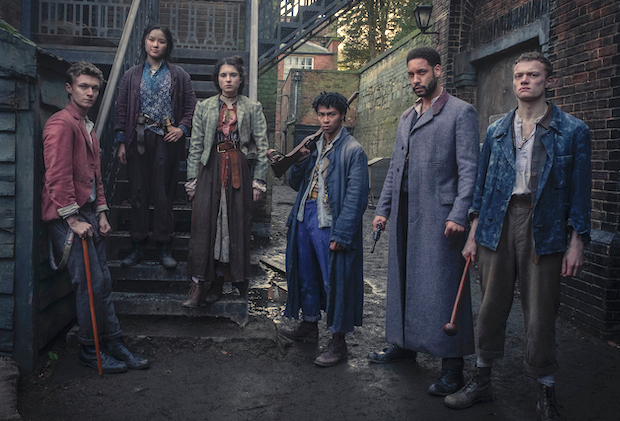
Netflix likes to show shows for young adults, and most of its subscribers seem to love period dramas like “Bridgerton” and “The Queen’s Gambit” right now. So, there’s every reason to think that “The Irregulars,” which comes out in its entirety today, March 26, will be another hit for Netflix, even if it struggles to be more than just regular TV.
I know there are passionate artists behind it, and some of the cast is good, especially the young actors, but it’s hard to forget that this is the result of a company’s algorithm, something that was born more in a boardroom than in a writer’s room. Even though the idea is interesting, it has too many of the problems that most Netflix original shows have. There’s enough talent here to suggest that it could become more interesting in the future, but the real mystery is how so many interesting parts can’t come together to make a fun whole.
The idea behind “The Irregulars” is clever, no doubt about it. Sherlock Holmes, who was created by Sir Arthur Conan Doyle, would often talk to street kids who had their ears to the ground to find out what he needed to know to solve a case. What if they actually solved the case for the drug-addicted Holmes and he just took the credit? In “The Irregulars,” which is set in Victorian London, a group of troubled teens are thrust into a world of murder mysteries and supernatural happenings. Doctor Watson (Royce Pierreson) and Sherlock Holmes (Henry Lloyd-Hughes), two of the most famous crime-solvers in history, are turned into supporting characters who usually cause trouble for the teens.
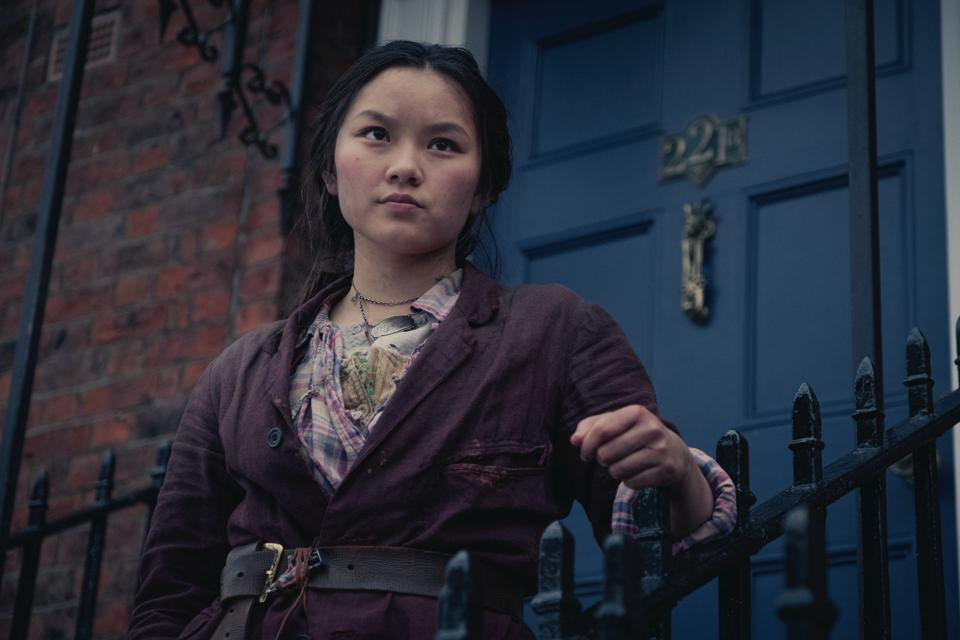
The main character in this show set in the past is 17-year-old Bea, who is both charming and strong. Bea is led by Thaddea Graham, a likely future star, who plays her as the tough-talking leader of a group of strange people who solve crimes. Her main goal is to protect her younger sister Jessie (Darci Shaw), who is weak but might be powerful. She also wants to find some kind of justice for what’s going on around her. Jessie has psychic abilities, and one of the most interesting parts of “The Irregulars” is how Bea and Jessie try to figure out the truth about their family history and what Jessie’s nightmares mean for their future.
The young men in “The Irregulars” don’t have as much of an impact as Graham or Shaw, but Harrison Osterfield is likely to be the audience favorite as Leo, the rich kid who has spent most of his 17 years stuck in his royal palace because he has a bleeding disorder. He falls in love with Bea and sneaks out to join them in their adventures. This upsets Billy (Jojo Macari), who has had a crush on Bea for most of his life but has never been able to tell her. Spike (McKell David), who is a charmer, and Watson and Holmes are the last two characters. Watson is portrayed as a charismatic manipulator who fights with Bea and the rest of the group more than anything else, while Holmes struggles with demons and addictions.
In the press notes for “The Irregulars,” Executive Producer Tom Bidwell says something interesting: “It’s quite a unique show with many different types: it’s an adventure, horror, crime, romance, fantasy, and mystery.” Yes, that’s great, but it’s also the problem with at least the first season of “The Irregulars” because it doesn’t do any of these things well enough. Creators can’t just check off all the genres; they have to make sure that each one works. There is a thin line between having a lot of different genres and just being a mess, and Bidwell’s show falls too often into the latter.
Part of the problem is that the direction feels too often flat and shapeless. The characters are tossed around in a costume drama, but they don’t always look natural or comfortable. The show works best when it brings everyone together and puts them in a setting and case with a lot of atmosphere. Episode 3 is a good example of this. However, the characters are moved around too much in different subplots, and the show doesn’t have enough skill to make up for its occasional lack of focus. It also hurts the show a lot that it has to run for a full 60 minutes, when in the old days of episode-based dramas, cutting it down to 44 minutes would have fixed most of its problems. But then it wouldn’t work so well for Netflix, would it?