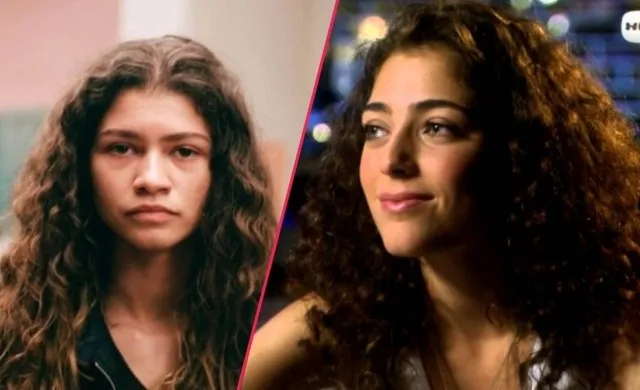
It would be almost insulting not to mention Euphoria when discussing the most successful shows released through HBO Max’s streaming services.
Zendaya won an Emmy for Outstanding Actress in a Leading Role in a Drama for her performance as Zendaya. The show has produced breakout stars such as fan-favorite Hunter Schafer and has also earned Zendaya an Emmy for Outstanding Actress in a Leading Role in.
However, despite the show’s immense popularity, it is relatively unknown that it was inspired by a lesser-known show produced in another country.
What are the differences between the euphoria of the past and the present?
The enigmatic show in question, which premiered in 2012, is also titled Euphoria (Oforia in Hebrew) and is set in Israel during the 1990s. Ron Leshem, the show’s head writer, has been quoted as saying that he drew a great deal of inspiration from Skins UK, which ran from 2007 to 2013.
Although the themes in the original Euphoria are similar to those in the more popular American version, specifically the graphic and frequently controversial content (who could forget season 2, episode 4? ), it is important to note that the characters, subplots, and structure are vastly different.
Adults were virtually nonexistent, which was a significant difference. In addition to filming certain scenes so that their faces were obscured or blurred, the film made sure to convey that the teenage characters were largely left to their own shady and sometimes even dangerous devices.
Tomer, a character played by Ashtray, is a murderer in the original version of the story. Tomer murders his tormentor, who is also the ex-boyfriend of a character named Hotif, after enduring years of relentless harassment. The American counterpart to Hotif is Rue, portrayed by Zendaya.
In the Israeli version, Hotif is deceased, which is arguably the greatest difference between the two series. After a drug overdose, Hotif recounts the afterlife adventures of her friends.
The Israeli Version Was Not Accepted Well
Leshem and director Daphna Levin took a significant risk with the show, but it was a risk with very little payoff. Due to Israel’s reputation for conservatism, a television program depicting teenagers engaging in high-risk and dangerous activities did not sit well with viewers.
Parents of adolescents were especially dissatisfied with the show, claiming it portrayed irresponsible adults and Israeli parents in a negative light. Another reason why it did not perform well in the ratings was that it aired on cable television, but was scheduled for late-night airing due to its graphic content. This made it difficult for interested viewers to continue watching after missing previous episodes.
In contrast, the US version has won multiple awards and remains one of the most critically acclaimed shows in the country.
Leshem stated in an interview with Israel’s Channel 12 News, “I felt like a failure; doors were slammed in my face. I attempted to pitch other ideas for more than a year, and there were times when executives did not return my calls. I feared I wouldn’t be able to make a living from writing in Israel.”
The Israeli Version Is Hard To View.
The numerous changes made to the US version, along with the excellent acting, music, and overall aesthetic, appear to be the key to the success of the show. It has an 8.4/10 rating on IMDB and an 88 percent rating on Rotten Tomatoes, whereas the Israeli version has only a 5.8/10 rating on IMDB and no Rotten Tomatoes page.
It’s possible that the nuances of the original are better appreciated now than they were when it first aired 10 years ago, but it’s surprisingly difficult to find online. Those residing in Israel or utilizing a VPN are able to stream episodes. And even then, there is the obstacle of brushing up on Hebrew, as that is the only subtitle format available for the show.
Despite this project’s flaws, Leshem has established an impressive career as a writer/producer. His name is associated with television series such as Valley of Tears, No Man’s Land, and the 2019 thriller Incitement, which won the Ophir Award for Best Picture (Israeli Academy Awards). He can also boast that he wrote the show that inspired Euphoria, which is a significant accomplishment in and of itself.